TWC Offers Employers Guidance on Protecting Their Business
Texas Workforce Commission • August 24, 2020

TWC educates business owners on employment fraud
The Texas Workforce Commission (TWC) asks for employers to help to prevent unemployment benefit overpayments by reporting employees receiving wages through Paycheck Protection Program loans or who refused acceptable work to TWC.
According to the Federal Trade Commission (FTC), to date, Americans have lost approximately $77 million in fraud to date, related to COVID-19, including federal aid programs and unemployment benefits.
To protect Program Integrity, TWC is asking employers to assist in preventing unemployment fraud by reporting employees who are currently, (or have in the past), received wages through the Paycheck Protection Program (PPP) loans, and are also receiving (or have received in the past) unemployment benefits during the same period. Employers can email the information to TWC at PPPreporting.BPC@twc.state.tx.us, and are asked to provide the employee’s name and last four digits of their Social Security number if available.
Receiving payments through PPP loans may disqualify claimants from receiving unemployment benefits under the regular program or the CARES Act UI Programs. There are multiple ways the receipt of these funds could impact UI eligibility, including whether the individual remains unemployed, or partially unemployed, or whether the individual has reportable income.
Promptly reporting suspected fraud to TWC can not only help protect Texas businesses, but also employees who need benefits. Failure to report information to TWC may negatively impact charges to an employer’s account on future unemployment claims.
In addition, employers are also asked to report employees who refused work. These instances can be reported through a
dedicated Employee Work Refusal Portal. Refusal to work may impact eligibility for benefits, though there are exceptions and TWC previously issued guidance to unemployment claimants on acceptable reasons to refuse suitable work. Each case is reviewed individually by TWC to determine benefit eligibility.
TWC would also like to remind employers to carefully review any Notices of Application for Unemployment Benefits or Notice of Maximum Potential Chargeback they receive for accuracy.
If a business receives a Notice of Application for Unemployment Benefits or Notice of Maximum Potential Chargeback from TWC (both pictured below) for an employee who has not separated from employment, or if the notice has incorrect separation information, employers should respond to the notice as soon as possible through the UI Submission Upload- Employers only portal, Employer Benefits Services System, the TWC fraud hotline at 800-252-3642 or TWC.fraud@twc.state.tx.us.

Workforce Solutions East Texas is seeking employer partners for Hiring Red, White & You!, the local celebration of Texas’ statewide veterans hiring event. Join us on Tuesday, November 10, 2026, at the Tyler Workforce Center, 1421 S. Beckham Ave., Tyler. The opening ceremony begins at 9:30 a.m., followed by the hiring event from 10 a.m. to 1 p.m. Hiring Red, White & You! connects employers with veterans, transitioning service members, military spouses, and other qualified East Texas job seekers. It is an opportunity to meet candidates whose military experience often reflects leadership, adaptability, communication skills, and a strong commitment to service. This event is open to the public, making it an excellent opportunity to promote current openings and build your organization’s talent pipeline. Employer participation is available at no cost. Across Texas, Hiring Red, White & You! events have connected more than 26,000 employers with 153,000 job seekers, including more than 52,000 veterans. Employers who hire qualifying veterans may also be eligible for federal Work Opportunity Tax Credit benefits of up to $9,600 per eligible hire. Reserve your employer space today by registering at www.EastTexasWorkforce.org/hrwy .

The Texas Workforce Commission (TWC) is currently accepting applications for the Upskill Texas grant program. This technical training initiative provides crucial funding for Texas businesses looking to enhance their workforce's skills and remain competitive in today's rapidly evolving economy. Upskill Texas offers financial support to employers that are: Expanding their operations Retooling their processes Introducing new services or product lines Experiencing organizational structure changes that could avert layoffs Through Upskill Texas, employers may be reimbursed up to $3,000 per trainee for 100% technical training. The majority of the trainees must have been employed by the business for at least six months. To be eligible, businesses must have 100 or more employees located in Texas and provide a 50% employer match, which can include trainee wages and benefits. Private employers may appoint a designee for the grant, including community or technical colleges, third-party trainers, or workforce development boards. Projects can range from $150,000 to $500,000. Follow the link below to learn more.
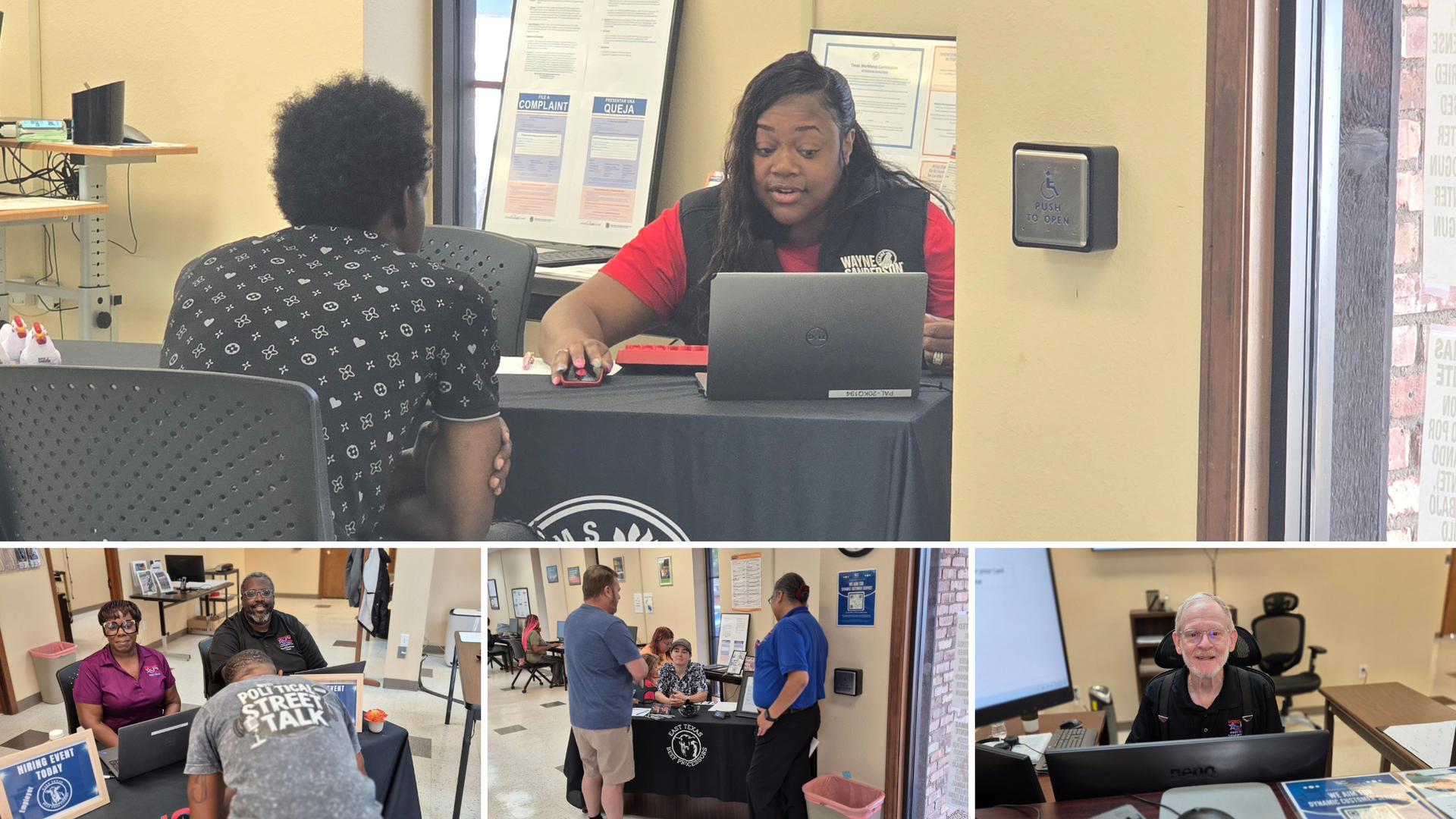
Workforce Solutions East Texas is strengthening its role as a workforce development leader in the Palestine area by bringing some of the region’s top employers directly to the community. Through a growing series of hiring events hosted at the Palestine office, local job seekers are gaining direct access to employers, career opportunities, and a dedicated team ready to help them take their next step. The events have already generated strong results. On August 14, Wayne Sanderson Farms brought 51 job seekers to the Palestine office for a hiring event. The response was so strong that the company was able to fill its entire first shift through the event, demonstrating the impact that direct connections between employers and job seekers can have. The momentum continued on September 4, when East Texas Beef Processors welcomed 50 job seekers to its hiring event at the Palestine office. The strong turnout provided the company with an opportunity to connect with local talent while giving residents a chance to learn more about available careers and employment opportunities. These events are doing more than filling positions. They are helping Workforce Solutions East Texas build stronger relationships with employers throughout the region while establishing the Palestine office as a convenient, trusted resource for businesses and job seekers alike. By creating opportunities for employers to recruit locally, Workforce Solutions East Texas is helping strengthen the connection between the region’s workforce and the businesses that drive its economy. Residents looking for their next career opportunity are encouraged to stop by the Palestine Workforce Solutions East Texas office, meet with employers, explore available positions, and connect with the staff who are ready to provide guidance and support throughout their job search. As the Palestine office continues expanding its employer partnerships and hiring event offerings, Workforce Solutions East Texas is demonstrating what workforce development looks like in action: bringing employers and job seekers together, responding to the needs of the local economy, and creating pathways to opportunity right here in the community.