Road to Employment: Texas First Lady and Texas Workforce Commissioner Representing Employers Collaborate to Help Transitioning Foster Youth
Texas Workforce Commission • March 3, 2020
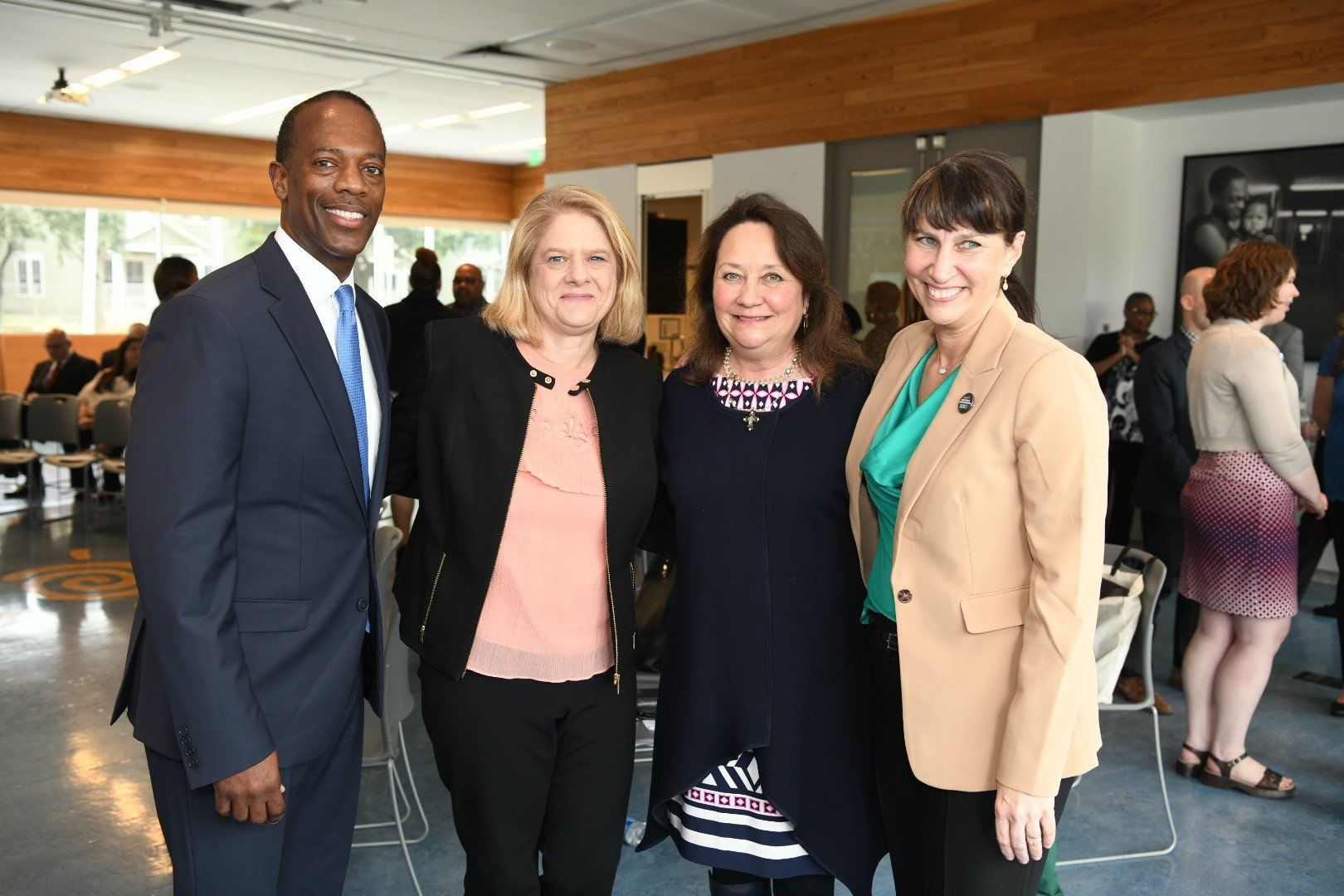
Texas First Lady Cecilia Abbott met with employers, community advocates and the Texas Workforce Commission (TWC) at a foster youth transition center in Austin, Texas today to bring awareness for the needs and support of foster youth. Every person counts, especially kids in foster care, which is why the TWC provides funding and support services to 18 Foster Youth Transition centers across the state of Texas. These transition centers help foster youth ages 15 and a half to 25 overcome obstacles to employment opportunities. TWC Commissioner Representing Employers Aaron Demerson is touring each facility and has invited major employers to assist foster youth that are aging out of the system with employment career opportunities.
“For every child in our foster care system to live a life worthy of their promise, they need what I call a Network of Nurture—a community of families and friends, churches and congregations, business leaders and nonprofit organizations, and anyone willing to share of themselves,” said Texas First Lady Cecilia Abbott. “For our youth in foster care nearing adulthood, they especially need our help in finding the right path to self-sufficiency and career success.”
According to Texas Department of Family and Protective Services, in Fiscal Year 2018, 17,500 youth resided in foster care in Texas. Of that number, on average 900 children in Texas age out of the system each year. TWC has funded multiple transition centers since 2008 in an effort to provide a central clearinghouse of one-stop services to serve the diverse needs of older foster youth aging out of the system, youth experiencing homelessness, or other at-risk youth from ages 15 and a half to 25.
“Today is great example of the community and businesses working together to provide career opportunities for transitioning foster youth in Texas,” said TWC Commissioner Representing Employers Aaron Demerson. “I look forward to visiting with organizations, employers and workforce advocates at Foster Youth Transition centers throughout Texas to listen, learn and take action related to employment opportunities.
Transition centers are designed to serve as host locations for services such as Preparation for Adult Living (PAL) services, job readiness and job search assistance, career exploration, higher education enrollment assistance, food and housing assistance, and mentoring. Transition centers also provide colocation opportunities for local partners such as local Workforce Solutions staff, TWC-funded workforce advocates, and colleges and universities to help jointly serve the diverse needs of the youth in one location.
The 18 Transition centers are independently funded, operated, and supported by partnerships between DFPS, the DFPS providers, community partners and TWC. A list of TWC sponsored transition centers can be found at https://twc.texas.gov/foster-youth-transition-centers.

Workforce Solutions East Texas is seeking employer partners for Hiring Red, White & You!, the local celebration of Texas’ statewide veterans hiring event. Join us on Tuesday, November 10, 2026, at the Tyler Workforce Center, 1421 S. Beckham Ave., Tyler. The opening ceremony begins at 9:30 a.m., followed by the hiring event from 10 a.m. to 1 p.m. Hiring Red, White & You! connects employers with veterans, transitioning service members, military spouses, and other qualified East Texas job seekers. It is an opportunity to meet candidates whose military experience often reflects leadership, adaptability, communication skills, and a strong commitment to service. This event is open to the public, making it an excellent opportunity to promote current openings and build your organization’s talent pipeline. Employer participation is available at no cost. Across Texas, Hiring Red, White & You! events have connected more than 26,000 employers with 153,000 job seekers, including more than 52,000 veterans. Employers who hire qualifying veterans may also be eligible for federal Work Opportunity Tax Credit benefits of up to $9,600 per eligible hire. Reserve your employer space today by registering at www.EastTexasWorkforce.org/hrwy .

The Texas Workforce Commission (TWC) is currently accepting applications for the Upskill Texas grant program. This technical training initiative provides crucial funding for Texas businesses looking to enhance their workforce's skills and remain competitive in today's rapidly evolving economy. Upskill Texas offers financial support to employers that are: Expanding their operations Retooling their processes Introducing new services or product lines Experiencing organizational structure changes that could avert layoffs Through Upskill Texas, employers may be reimbursed up to $3,000 per trainee for 100% technical training. The majority of the trainees must have been employed by the business for at least six months. To be eligible, businesses must have 100 or more employees located in Texas and provide a 50% employer match, which can include trainee wages and benefits. Private employers may appoint a designee for the grant, including community or technical colleges, third-party trainers, or workforce development boards. Projects can range from $150,000 to $500,000. Follow the link below to learn more.
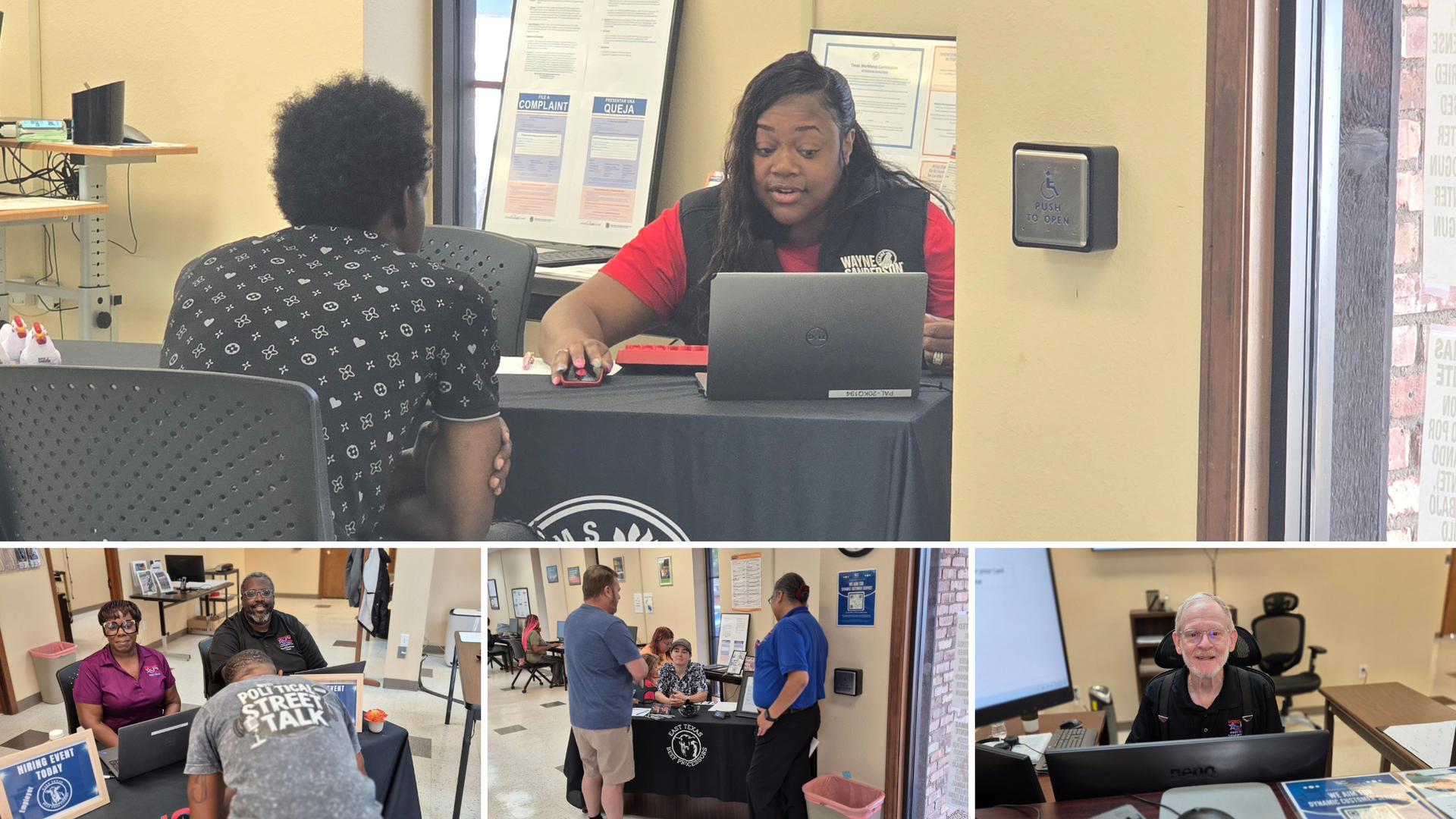
Workforce Solutions East Texas is strengthening its role as a workforce development leader in the Palestine area by bringing some of the region’s top employers directly to the community. Through a growing series of hiring events hosted at the Palestine office, local job seekers are gaining direct access to employers, career opportunities, and a dedicated team ready to help them take their next step. The events have already generated strong results. On August 14, Wayne Sanderson Farms brought 51 job seekers to the Palestine office for a hiring event. The response was so strong that the company was able to fill its entire first shift through the event, demonstrating the impact that direct connections between employers and job seekers can have. The momentum continued on September 4, when East Texas Beef Processors welcomed 50 job seekers to its hiring event at the Palestine office. The strong turnout provided the company with an opportunity to connect with local talent while giving residents a chance to learn more about available careers and employment opportunities. These events are doing more than filling positions. They are helping Workforce Solutions East Texas build stronger relationships with employers throughout the region while establishing the Palestine office as a convenient, trusted resource for businesses and job seekers alike. By creating opportunities for employers to recruit locally, Workforce Solutions East Texas is helping strengthen the connection between the region’s workforce and the businesses that drive its economy. Residents looking for their next career opportunity are encouraged to stop by the Palestine Workforce Solutions East Texas office, meet with employers, explore available positions, and connect with the staff who are ready to provide guidance and support throughout their job search. As the Palestine office continues expanding its employer partnerships and hiring event offerings, Workforce Solutions East Texas is demonstrating what workforce development looks like in action: bringing employers and job seekers together, responding to the needs of the local economy, and creating pathways to opportunity right here in the community.