
TWC Celebrates the 30th Anniversary of the Americans with Disabilities Act
Texas Workforce Commission • July 17, 2020

Free virtual workshops throughout July will feature distinguished panelists
This month, the Texas Workforce Commission (TWC) celebrates the 30th anniversary of the passage of the Americans with Disabilities Act (ADA), the first comprehensive civil rights law for people with disabilities, prohibiting discrimination in employment, public accommodations, transportation, telecommunications, among others. TWC, in partnership with the Governor’s Committee on People with Disabilities, the Texas Department of Transportation, Texas Parks and Wildlife and Disability Rights Texas, will present a series of virtual workshops
as part of the monthlong event titled “ADA 30 Years - Moving Forward.” The celebration culminates with a virtual tour of Texas on July 24 and includes a Texas-sized celebration keynote
featuring renowned disability rights educator, activist and chief architect of the ADA Dr. Lex Frieden.
“We take this time to recognize the Americans with Disabilities Act and the foundation it has provided to ensure people with disabilities can fully participate in our communities,” said TWC Chairman Bryan Daniel. “TWC will continue to support a Texas workforce system that values and acknowledges the contributions of individuals with disabilities.”
While most people think of the ADA as the set of laws requiring things like wheelchair ramps, accessible transportation or interpreters, we can also credit the spirit of the ADA for helping to inspire innovations in accessible technology that has improved the quality of life for individuals with disabilities. Accommodations in employment required by the ADA help to level the playing field by providing supports for people with disabilities and most accommodations come with minimal costs or changes for employers. Examples of reasonable accommodations include making existing facilities accessible; job restructuring; part-time or modified work schedules; acquiring or modifying equipment, training materials, or policies; and providing qualified readers or interpreters.
Estimates from the U.S. Census Bureau are that one in four Americans, or 61 million adults, have a disability and 19.6 million people between 21-64 with a disability. In Texas, 9.7 percent of working age Texans between 21-64 have a disability or about 1.5 million people. As of June 2020, the unemployment rate for people with a disability was 17.6 percent, as compared to 11.1 percent for people without a disability.
“Businesses that make inclusion a priority in their hiring processes, not only benefit their business, but they send a clear message to their workforce and local community that everyone’s abilities are valued,” said TWC Commissioner Representing Employers Aaron Demerson. “The influence of businesses and employers can have an immeasurable impact on decreasing the unemployment rate among individuals with disabilities. “I encourage Texas businesses to connect with the VR and Workforce Professionals at their local Workforce Solutions Office to discover ways that can be assisted in making inclusion a priority.”
As Texas employers make plans for their future business and workforce needs, accommodation and inclusion will be important factors in building teams that are innovative and adaptable so that they can look at old problems in new and different ways. Individuals with disabilities are experienced problem solvers with a proven ability to adapt.
“As we commemorate this milestone of the 30th anniversary of the ADA, this year also marks the 75th observance of the National Disability Employment Awareness Month (NDEAM),” said TWC Commissioner Representing Labor Julian Alvarez. “This year’s theme is ‘Increasing Access and Opportunity.’ That is a mission that TWC takes to heart throughout the year. Our mission is to serve all Texans. I encourage job seekers, employers and anyone wanting to learn more to participate in one of the many ADA webinars this month.”
Texas Workforce Solutions-Vocational Rehabilitation Services (TWS-VRS) partners with the Texas Workforce System to support job seekers with disabilities as they prepare for, obtain or maintain competitive integrated employment. To find a VR office, please visit www.texas.gov/VRNearMe.

The Texas Workforce Commission (TWC) is currently accepting applications for the Upskill Texas grant program. This technical training initiative provides crucial funding for Texas businesses looking to enhance their workforce's skills and remain competitive in today's rapidly evolving economy. Upskill Texas offers financial support to employers that are: Expanding their operations Retooling their processes Introducing new services or product lines Experiencing organizational structure changes that could avert layoffs Through Upskill Texas, employers may be reimbursed up to $3,000 per trainee for 100% technical training. The majority of the trainees must have been employed by the business for at least six months. To be eligible, businesses must have 100 or more employees located in Texas and provide a 50% employer match, which can include trainee wages and benefits. Private employers may appoint a designee for the grant, including community or technical colleges, third-party trainers, or workforce development boards. Projects can range from $150,000 to $500,000. Follow the link below to learn more.
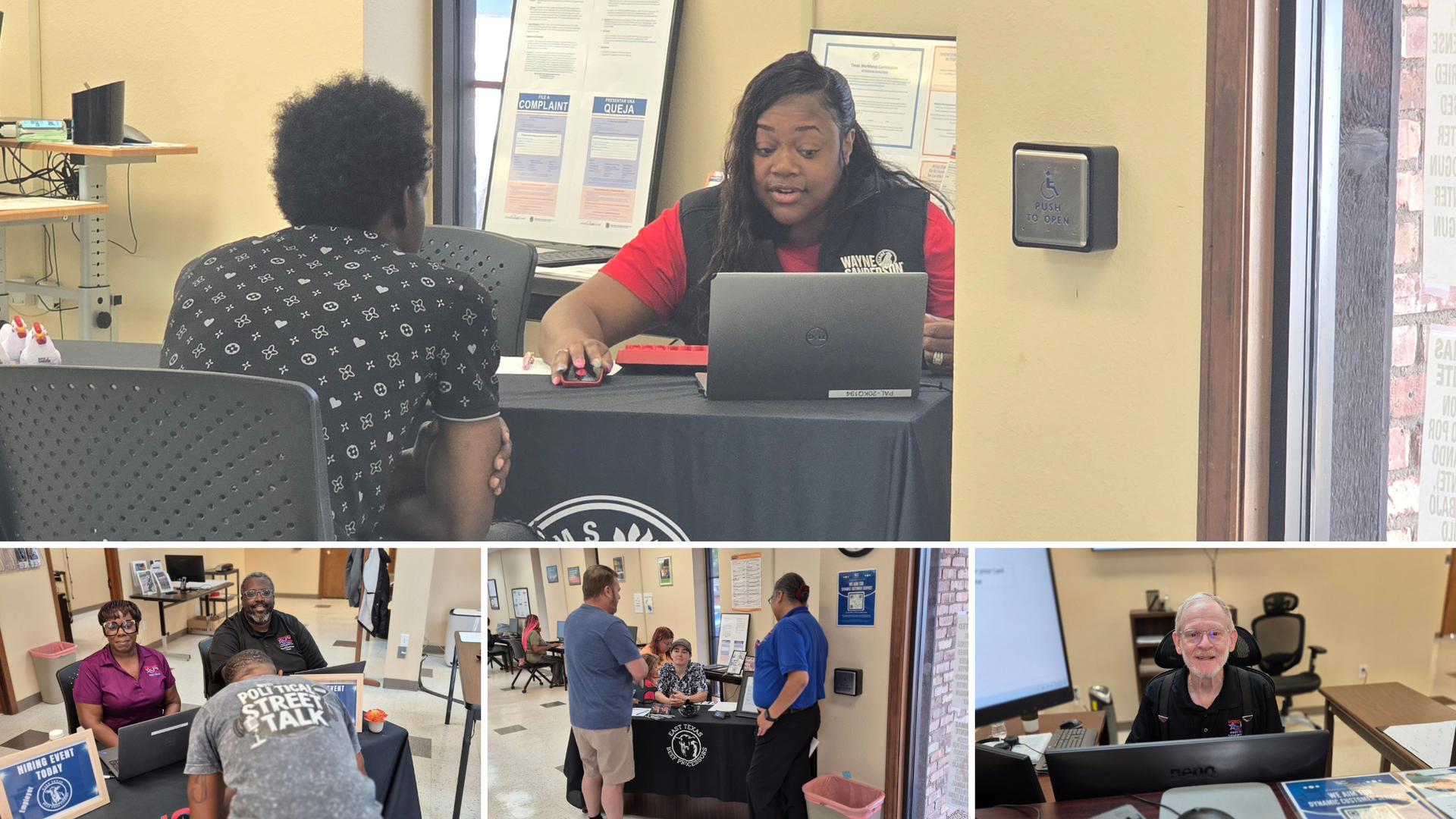
Workforce Solutions East Texas is strengthening its role as a workforce development leader in the Palestine area by bringing some of the region’s top employers directly to the community. Through a growing series of hiring events hosted at the Palestine office, local job seekers are gaining direct access to employers, career opportunities, and a dedicated team ready to help them take their next step. The events have already generated strong results. On August 14, Wayne Sanderson Farms brought 51 job seekers to the Palestine office for a hiring event. The response was so strong that the company was able to fill its entire first shift through the event, demonstrating the impact that direct connections between employers and job seekers can have. The momentum continued on September 4, when East Texas Beef Processors welcomed 50 job seekers to its hiring event at the Palestine office. The strong turnout provided the company with an opportunity to connect with local talent while giving residents a chance to learn more about available careers and employment opportunities. These events are doing more than filling positions. They are helping Workforce Solutions East Texas build stronger relationships with employers throughout the region while establishing the Palestine office as a convenient, trusted resource for businesses and job seekers alike. By creating opportunities for employers to recruit locally, Workforce Solutions East Texas is helping strengthen the connection between the region’s workforce and the businesses that drive its economy. Residents looking for their next career opportunity are encouraged to stop by the Palestine Workforce Solutions East Texas office, meet with employers, explore available positions, and connect with the staff who are ready to provide guidance and support throughout their job search. As the Palestine office continues expanding its employer partnerships and hiring event offerings, Workforce Solutions East Texas is demonstrating what workforce development looks like in action: bringing employers and job seekers together, responding to the needs of the local economy, and creating pathways to opportunity right here in the community.

After 30 years with the same employer, Ms. Paul never imagined she would have to start over. Her career with a staffing company had been built over three decades of experience in customer service and payroll. Then, without warning, she was laid off. “It was nerve-wracking. I’m a single mom of two. How are we going to survive?” After such a long career with one employer, Ms. Paul wasn't sure where to begin. The job market had changed, and she worried about finding a position that valued her experience while meeting her salary needs. That's when she discovered Workforce Solutions East Texas and the RESEA program. Ms. Paul initially knew very little about RESEA. Through the program, she discovered the resources available through WorkInTexas.com, including the Virtual Recruiter, Resume Builder, job search tools, career exploration resources, and WIOA opportunities. But the greatest impact came from the personalized support of her Career Navigator, Cheryl Jackson. Cheryl helped Ms. Paul update her resume, explore new career possibilities, prepare for interviews, and regain confidence in a job market she hadn't navigated in 30 years. “Cheryl gave me the confidence to job search and interview. Thirty years ago was so different from now, so her guidance was very helpful.” Through career exploration and mock interviews, Ms. Paul discovered opportunities she had never considered and gained the confidence to present her skills to employers. “She gave me the confidence and support I needed.” Today, Ms. Paul is working in payroll and invoicing for a staffing company and will soon take on additional responsibilities in fleet management. What began as an unexpected and frightening transition became a new chapter filled with possibility. RESEA didn't just connect Ms. Paul with resource, it helped her recognize that after 30 years of experience, she wasn't starting over. She was moving forward with confidence. Her advice to others facing an unexpected job loss is simple: “Use all of your resources. You never know where a job will come from, so use everything.”